Saturday, 22 December 2012

Touristic Guide / Italy

WELCOME TO VEZZANO LIGURE
Vezzano Ligure
“…dove il paesaggio si apre d’un colpo,
Immenso come una favola. “
Mario Tobino
Writer

https://maps.google.it/maps?hl=it&ie=UTF-8&q=cartografia+v+ezzano+ligure&fb=1&gl=it&hq=cartografia+v+ezzano+ligure&ei=d5aSUJjiNq6M4gTS_4GwCQ&ved=0CJoBEM

As every medieval village, placed on the hill, the heart of the settlement was the “castrum romanum” (the ancient roman camp), the wall and the towers made of stone.


Ancient domestic tools.

HES
AND VAULTS
“…ripidissime scale incavate nella collina, passaARCggi da orti, sentieri incisi, …, tetti su tetti, cantine;…… tra mura e mura, semibuio di giorno, di notte tenebra.”
Mario Tobino

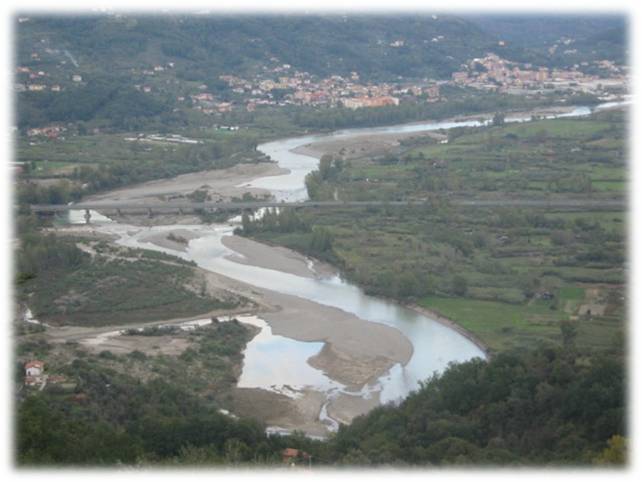
During medieval time, the lord of our village checked the river fords and the tracks, on which they impose the payment of a toll.

Palazzo Giustiniani


Torre pentagonale
In the lower part of Vezzano, we can find the torre pentagonale (XIII cent.), some ancient wall remains and palazzo Giustiniani


Saint George Arch
VEZZANO


Vezzano (HIGHER PART): il pozzo medievale


A WONDERFUL BLANKET OF CHURCHES
Chiesa parrocchiale dei Santi Siro e Prospero (XVII sec.)
Vezzano Superiore


Vezzano (lower part)
Chiesa romanica di
Santa Maria


LA SAGRA DELL’UVA..our traditional grapes feast


All the pictures have been taken by our students, during our “laboratory classes”
See you soon!!!

Wednesday, 19 December 2012

My Town / La Spezia / Italy

I live in La Spezia, a small town near Genova.
My town isn’t very big, but it is very cosyand quaint because there are a lot of shops, a lot of theatres, cinemas, swimming pools, museums(for example thCAMEC museum or Liathemuseum), bars, gardens and…….the sea!!! I love it because the water is so crystalline!!!
THE SEA
There is a beautiful La Spezia is very famous and well-known for its port and its Arsenal! Have you ever heard about it?
dock, where people usually walk!
THE DOCK
Chiodo,that is in front of the Arsenal! There are a lot of flowers along the dock so that you can enjoy their sight while you are walking!
There are a lot of monuments too, for example “the statue of Garibaldi” or the statue of Domenico
Domenico Chiodo…
The climate in La Spezia ismild…. It is a rainy city, but in summer the sun always shines and people spend their spare time on the local sandy beaches

The typical food of La Spezia is “mesciua”….. it is a poor dish, because,inthere,there are only cereals and legums!
But…….My favourite food is pizza…. It is so delicious I love it! In this dish there are cheese and tomatoes!
In my town a new shopping mall has been opened . Its name is ”Le Terrazze”…… it is a paradise for those who love shopping! There are 16 restaurants and bars and 90 shops! For this reason, even if I think that it is bewildering to shop there, I also think that it is a bit too crowded at week-ends!

Wednesday, 12 December 2012

Healthy Lifestyles: Together is Better / Italy

It has been since 2001 that our school has decided to improve our pupils’ understanding of how important it is to have a good attitude to food. Thus said, in cooperation with families and with the local baker we prepare the snacks for children. Every morning we decide together if it is better to have a slice of bread with honey or jam.
HAVING A SNACK TOGETHER

FRESH JAM AND A SLICE OF BREAD.
Furthermore in 2010-2011 our school took part to the programme «Fresh fruits in Primary schools» the European programme “Frutta nelle scuole”,  planned with the support (CE) n.1234/2007  of the Council of the 22th October 2007, aims at varying children nutrition and balance it with a higher use of fresh products.
The main objectives of the programme are:
Increase the consumption of fresh products in younger children
Offer children a chance to learn how to recognise different products and enable them to be more aware of the dangers of junk food as they are promoted by mass-media advertisement. All the infos given to children will be adapted in order to fit to their learning styles.
For the school years 2010-2011 the following products have been chosen for their easiness to be eaten and their freshness :
Oranges
Strawberries
Kiwi
Apples
Pears
Carrots
Fennels
Tomatoes
Melon
Apricots
Certified products (D.O.P., I.G.P.,  Biological) have been selected and preferred   as well as products coming form the EU territories , wholly guaranteed.In the choice of those products we also took care to select seasonal vegetables and fruits
TASTING MELON.
AND NOW LET’S ENJOY THE LESSONS AGAIN AND KEEP ON WITH GOOD HABITS
Before starting our music lesson we join our hands in the «magic circle» as TOGETHER IS FAR BETTER!

Saturday, 8 December 2012

Let's stop bullying through music

At the beginning of the ice hockey match in Arena Zagreb on November 14, 2012, our school band sang a cheerleading song supporting the Croatian ice hockey team Medvescak. 


Let's stop bullying through music

The action was started by radio station Antena Zagreb. 
Many famous people-musicans, sports people support it. 

Our pupil  Nika Adamovic (class 8.b) and her friends took part in the competion and won second place.
Their mentor was famous Croatian singer Nina Badric. 


                                     Nika's performance at the concert in VIP club on Nov 7

We very all very proud of Nika. Congratulations and many thanks to Nika and her band
and their mentor, German teacher, Ivica Prpic !!!


You can watch the videos:
 http://dnevnik.hr/showbuzz/mladi_i_neizbjezni/jesu-li-one-nova-hrvatska-internet-senzacija.html

Famous Croatian sportspersons


  • Blanka Vlasic, World Champion, High Jump, Croatia
 
    This presentation was done by Goran Zovko (grade 8.b)

Sunday, 2 December 2012

European Day of Languages is celebrated on  September 26

There are over 6000 languages spoken in the world and more than 200 in Europe. And behind each and every one of them lies a rich and diverse culture.
     The librarian Drago Cavlovic was the main organizer of the event.


A tour of Zagreb


A short video

Zagreb, a city with a million hearts


Powerpoint presentation by Larissa Hasanbegović, class 8.b

3rd Comenius partnership meeting in Croatia-film

                                             The video was made by Ivana Cale.
                                             You can see the short version of the video: 

Wednesday, 21 November 2012

Visit Lithuania / Chech Republic


Barbora Hejtmankova, English Teacher of Základní škola Bělá pod Pradědem /Czech Republic

Assertiveness Training/ Czech Republic


Barbora Hejtmankova, English Teacher of Základní škola Bělá pod Pradědem /Czech Republic

Our Famous Sport Person / Czech Republic


Barbora Hejtmankova, English Teacher of Základní škola Bělá pod Pradědem /Czech Republic


Wednesday, 14 November 2012

My Town: The Place Where We Are living / Czech Republic


Barbora Hejtmankova, English Teacher of Základní škola Bělá pod Pradědem /Czech Republic

Tuesday, 6 November 2012

Our School / Czech Republic


Barbora Hejtmankova, English Teacher of Základní škola Bělá pod Pradědem /Czech Republic


Thursday, 4 October 2012

MY TURKISH DICTIONARY/ TURKEY


Aslı Altan Altundal, English Teacher of Türkkonut Emel Önal  Primary School/Turkiye


Thursday, 20 September 2012

MY TOWN: ANKARA


Welcome to Ankara! To know a city passes through sharing its secrets.... Let's see what this town will tell you about itself? First it wishes to tell its legends. Maybe, sweeping you to a fairy tale world. Tell you how splendiferous a life it as lived although you call it a step today. Wishing to show you its 1001 face through a looking glass. If you are ready to listen, let's have a journey to history.


Ankara's history dates back to Bronze Age. Small palace remaining of Bronze Age found on the digs at the southwest of the city, Ahlatlıbel and Koçumbeli, shows us the existence of small principalities during prehistoric period. Later Ankara and environ seized by Hittites and Phrygians. The most favorite legend about the city is about the origin of the name Ankara. It's presumed the name comes from the word "Anchor". According to legend, Phrygian King Midas hears a voice on his dream: "Find a big anchor on your land and build a big city there. That city will bring you happiness and prosperity". He ordered his men to find this anchor and many days later it is found at a hill where Ankara Kalesi stands today. Midas immediately builds a city there and names it Ankyra. Between B.C. 750-500 Ankara has been an important center for Phrygians and various works of that period found on diggings are now being exhibited at Anadolu Medeniyetleri Müzesi (Museum of Anatolian Civilizations).

After Phrygians the city has been under the sovereignty of Macedonian King Alexander the Great and has again an important trade center. After his death the city was the capital of Kelts (Galats) who have been migrated from Europe to Anatolia in three wings. Another legend of Ankara of that period: When Galats beat the Egyptian fleet on the Mediterranean; they have brought back the anchors of those ships as the symbol of their victory and placed them to the temples.


From then on they call the city Angora. Probably Galatians were longing for sea and filled their temples with anchors. Who knows maybe this is the reason of people of this town missing the sea so much and running to seashore in summer.
Galatians were worshiping the God Men and Goddess Cybele. When Roman Emperor Augustus had Galatians under Roman sovereignty Ankyra or Angora had been the capital of Roman State Galat. Then in homage to Augustus the name of the town has been converted to "Sebaste" (Respected) and Augustus had built a temple to his name: Augustus Tapınağı. Ankyra showed a very fast development and became an important military base where the emperors and armies rest during the eastern wars. The city had its gorgeous period in the 2nd century A.D. by expanding its borders from the Castle to today's Kızılay.
This development had reached a stop due to the Roman Empire's circumstances and a period of chaos dominated the city. Later, with the spread of Christianity in the mid-4th century Ankyra became an important religious center.


Two council meetings took place in 314 and 358 and ecclesiastics took important decisions. Emperor Julianus stayed there and had new laws to strengthen the city management. When the Roman Empire was divided in 395 the city became a part of East Roman Empire. Beginning from the 7th century Arabian attacks ruined Ankara Kalesi several times and restored by Roman Emperors. And then Ankyra under the sovereignty of Byzantine Empire had a calmer period until 11th century.
When Seljuk Sultan Alparslan beat the Byzantine army in Malazgirt on 1071 Ankara has been seized by Turks first as a city of Seljuk Empire then Danişment Domain. The name of the city was converted to Engürü meaning "Grape City" in Persian. During the Crusaders the town has again been seized by Byzantine and had been an eastern border castle of the Empire for a while. In 1169 when Kılıçarslan had the city and ensured Anatolian Seljuk Unity. Later the city has been under the Mogul invasion and at last had been a city of Ottoman Empire in 1356 and Ankara was the field of Ankara War in 1402 between Timur and Sultan Yıldırım Bayezit that was ended with the defeat of Ottoman army. During the period Timur's withdrawal from Anatolia the governance has been changed for a few times more. Now let's hear a legend: What is the origin of the word "Anatolia", as we call Anadolu. After the defeat Yıldırım Beyazıt's army began to withdraw and arrived a village. A very old woman has met the army and prepared ayran for the tired soldiers. They quaffed the never-finishing ayran and as the soldiers hold out their cups the ayran bowl was filling again. The old woman was wandering among the soldiers and filling their cups continuously and the soldiers call her "Ana Dolu" (Mother, Full). Well, this is the origin of the name Anadolu.
State organization was founded as a result of Ottoman Empire's expanding and Ankara has been the center of Anatolia State. The most important income source of the city was the trade of "mohair" and cloths made of mohair and leather. The fame of Ankara goat has already passed over the borders and has been a favorite fabric. The goat statutes decorating the parks and gardens of today's Ankara emphasize their importance. Although you cannot come across one single vineyard, Ankara was full of vineyards those days. However it is worth to mention Kalecik and Kalecik Karası brand wine of environ Ankara at least for the sake of yesterday's Ankara and "Engürü" meaning Grape Town!
Ankara has been visited by various European travelers. An oil painting of Ankara of an unknown 17th century artist is still being exhibited in Rijks museum in Amsterdam. Don't miss to drop if you pass by Amsterdam.


Following World War I, Ankara became a center that Atatürk gave great importance. After the independence war Ankara has been the capital of the new Republic of Turkey and developed fast since then.