


Aslı Altan Altundal, English Teacher of Türkkonut Emel Önal Primary School/Turkiye
Thursday, 4 October 2012
Thursday, 20 September 2012
MY TOWN: ANKARA
Welcome to Ankara! To know a city passes through sharing its secrets.... Let's see what this town will tell you about itself? First it wishes to tell its legends. Maybe, sweeping you to a fairy tale world. Tell you how splendiferous a life it as lived although you call it a step today. Wishing to show you its 1001 face through a looking glass. If you are ready to listen, let's have a journey to history.

Ankara's history dates back to Bronze Age. Small palace remaining of Bronze Age found on the digs at the southwest of the city, Ahlatlıbel and Koçumbeli, shows us the existence of small principalities during prehistoric period. Later Ankara and environ seized by Hittites and Phrygians. The most favorite legend about the city is about the origin of the name Ankara. It's presumed the name comes from the word "Anchor". According to legend, Phrygian King Midas hears a voice on his dream: "Find a big anchor on your land and build a big city there. That city will bring you happiness and prosperity". He ordered his men to find this anchor and many days later it is found at a hill where Ankara Kalesi stands today. Midas immediately builds a city there and names it Ankyra. Between B.C. 750-500 Ankara has been an important center for Phrygians and various works of that period found on diggings are now being exhibited at Anadolu Medeniyetleri Müzesi (Museum of Anatolian Civilizations).

After Phrygians the city has been under the sovereignty of Macedonian King Alexander the Great and has again an important trade center. After his death the city was the capital of Kelts (Galats) who have been migrated from Europe to Anatolia in three wings. Another legend of Ankara of that period: When Galats beat the Egyptian fleet on the Mediterranean; they have brought back the anchors of those ships as the symbol of their victory and placed them to the temples.
.png)
From then on they call the city Angora. Probably Galatians were longing for sea and filled their temples with anchors. Who knows maybe this is the reason of people of this town missing the sea so much and running to seashore in summer.
Galatians were worshiping the God Men and Goddess Cybele. When Roman Emperor Augustus had Galatians under Roman sovereignty Ankyra or Angora had been the capital of Roman State Galat. Then in homage to Augustus the name of the town has been converted to "Sebaste" (Respected) and Augustus had built a temple to his name: Augustus Tapınağı. Ankyra showed a very fast development and became an important military base where the emperors and armies rest during the eastern wars. The city had its gorgeous period in the 2nd century A.D. by expanding its borders from the Castle to today's Kızılay.
This development had reached a stop due to the Roman Empire's circumstances and a period of chaos dominated the city. Later, with the spread of Christianity in the mid-4th century Ankyra became an important religious center.

Two council meetings took place in 314 and 358 and ecclesiastics took important decisions. Emperor Julianus stayed there and had new laws to strengthen the city management. When the Roman Empire was divided in 395 the city became a part of East Roman Empire. Beginning from the 7th century Arabian attacks ruined Ankara Kalesi several times and restored by Roman Emperors. And then Ankyra under the sovereignty of Byzantine Empire had a calmer period until 11th century.
When Seljuk Sultan Alparslan beat the Byzantine army in Malazgirt on 1071 Ankara has been seized by Turks first as a city of Seljuk Empire then Danişment Domain. The name of the city was converted to Engürü meaning "Grape City" in Persian. During the Crusaders the town has again been seized by Byzantine and had been an eastern border castle of the Empire for a while. In 1169 when Kılıçarslan had the city and ensured Anatolian Seljuk Unity. Later the city has been under the Mogul invasion and at last had been a city of Ottoman Empire in 1356 and Ankara was the field of Ankara War in 1402 between Timur and Sultan Yıldırım Bayezit that was ended with the defeat of Ottoman army. During the period Timur's withdrawal from Anatolia the governance has been changed for a few times more. Now let's hear a legend: What is the origin of the word "Anatolia", as we call Anadolu. After the defeat Yıldırım Beyazıt's army began to withdraw and arrived a village. A very old woman has met the army and prepared ayran for the tired soldiers. They quaffed the never-finishing ayran and as the soldiers hold out their cups the ayran bowl was filling again. The old woman was wandering among the soldiers and filling their cups continuously and the soldiers call her "Ana Dolu" (Mother, Full). Well, this is the origin of the name Anadolu.
State organization was founded as a result of Ottoman Empire's expanding and Ankara has been the center of Anatolia State. The most important income source of the city was the trade of "mohair" and cloths made of mohair and leather. The fame of Ankara goat has already passed over the borders and has been a favorite fabric. The goat statutes decorating the parks and gardens of today's Ankara emphasize their importance. Although you cannot come across one single vineyard, Ankara was full of vineyards those days. However it is worth to mention Kalecik and Kalecik Karası brand wine of environ Ankara at least for the sake of yesterday's Ankara and "Engürü" meaning Grape Town!
Ankara has been visited by various European travelers. An oil painting of Ankara of an unknown 17th century artist is still being exhibited in Rijks museum in Amsterdam. Don't miss to drop if you pass by Amsterdam.

Following World War I, Ankara became a center that Atatürk gave great importance. After the independence war Ankara has been the capital of the new Republic of Turkey and developed fast since then.

Welcome to Ankara! To know a city passes through sharing its secrets.... Let's see what this town will tell you about itself? First it wishes to tell its legends. Maybe, sweeping you to a fairy tale world. Tell you how splendiferous a life it as lived although you call it a step today. Wishing to show you its 1001 face through a looking glass. If you are ready to listen, let's have a journey to history.
Ankara's history dates back to Bronze Age. Small palace remaining of Bronze Age found on the digs at the southwest of the city, Ahlatlıbel and Koçumbeli, shows us the existence of small principalities during prehistoric period. Later Ankara and environ seized by Hittites and Phrygians. The most favorite legend about the city is about the origin of the name Ankara. It's presumed the name comes from the word "Anchor". According to legend, Phrygian King Midas hears a voice on his dream: "Find a big anchor on your land and build a big city there. That city will bring you happiness and prosperity". He ordered his men to find this anchor and many days later it is found at a hill where Ankara Kalesi stands today. Midas immediately builds a city there and names it Ankyra. Between B.C. 750-500 Ankara has been an important center for Phrygians and various works of that period found on diggings are now being exhibited at Anadolu Medeniyetleri Müzesi (Museum of Anatolian Civilizations).
After Phrygians the city has been under the sovereignty of Macedonian King Alexander the Great and has again an important trade center. After his death the city was the capital of Kelts (Galats) who have been migrated from Europe to Anatolia in three wings. Another legend of Ankara of that period: When Galats beat the Egyptian fleet on the Mediterranean; they have brought back the anchors of those ships as the symbol of their victory and placed them to the temples.
From then on they call the city Angora. Probably Galatians were longing for sea and filled their temples with anchors. Who knows maybe this is the reason of people of this town missing the sea so much and running to seashore in summer.
Galatians were worshiping the God Men and Goddess Cybele. When Roman Emperor Augustus had Galatians under Roman sovereignty Ankyra or Angora had been the capital of Roman State Galat. Then in homage to Augustus the name of the town has been converted to "Sebaste" (Respected) and Augustus had built a temple to his name: Augustus Tapınağı. Ankyra showed a very fast development and became an important military base where the emperors and armies rest during the eastern wars. The city had its gorgeous period in the 2nd century A.D. by expanding its borders from the Castle to today's Kızılay.
This development had reached a stop due to the Roman Empire's circumstances and a period of chaos dominated the city. Later, with the spread of Christianity in the mid-4th century Ankyra became an important religious center.
Two council meetings took place in 314 and 358 and ecclesiastics took important decisions. Emperor Julianus stayed there and had new laws to strengthen the city management. When the Roman Empire was divided in 395 the city became a part of East Roman Empire. Beginning from the 7th century Arabian attacks ruined Ankara Kalesi several times and restored by Roman Emperors. And then Ankyra under the sovereignty of Byzantine Empire had a calmer period until 11th century.
When Seljuk Sultan Alparslan beat the Byzantine army in Malazgirt on 1071 Ankara has been seized by Turks first as a city of Seljuk Empire then Danişment Domain. The name of the city was converted to Engürü meaning "Grape City" in Persian. During the Crusaders the town has again been seized by Byzantine and had been an eastern border castle of the Empire for a while. In 1169 when Kılıçarslan had the city and ensured Anatolian Seljuk Unity. Later the city has been under the Mogul invasion and at last had been a city of Ottoman Empire in 1356 and Ankara was the field of Ankara War in 1402 between Timur and Sultan Yıldırım Bayezit that was ended with the defeat of Ottoman army. During the period Timur's withdrawal from Anatolia the governance has been changed for a few times more. Now let's hear a legend: What is the origin of the word "Anatolia", as we call Anadolu. After the defeat Yıldırım Beyazıt's army began to withdraw and arrived a village. A very old woman has met the army and prepared ayran for the tired soldiers. They quaffed the never-finishing ayran and as the soldiers hold out their cups the ayran bowl was filling again. The old woman was wandering among the soldiers and filling their cups continuously and the soldiers call her "Ana Dolu" (Mother, Full). Well, this is the origin of the name Anadolu.
State organization was founded as a result of Ottoman Empire's expanding and Ankara has been the center of Anatolia State. The most important income source of the city was the trade of "mohair" and cloths made of mohair and leather. The fame of Ankara goat has already passed over the borders and has been a favorite fabric. The goat statutes decorating the parks and gardens of today's Ankara emphasize their importance. Although you cannot come across one single vineyard, Ankara was full of vineyards those days. However it is worth to mention Kalecik and Kalecik Karası brand wine of environ Ankara at least for the sake of yesterday's Ankara and "Engürü" meaning Grape Town!
Ankara has been visited by various European travelers. An oil painting of Ankara of an unknown 17th century artist is still being exhibited in Rijks museum in Amsterdam. Don't miss to drop if you pass by Amsterdam.
Following World War I, Ankara became a center that Atatürk gave great importance. After the independence war Ankara has been the capital of the new Republic of Turkey and developed fast since then.


Tuesday, 3 July 2012
Art Exhibition : Religion in Our Lives / Poland


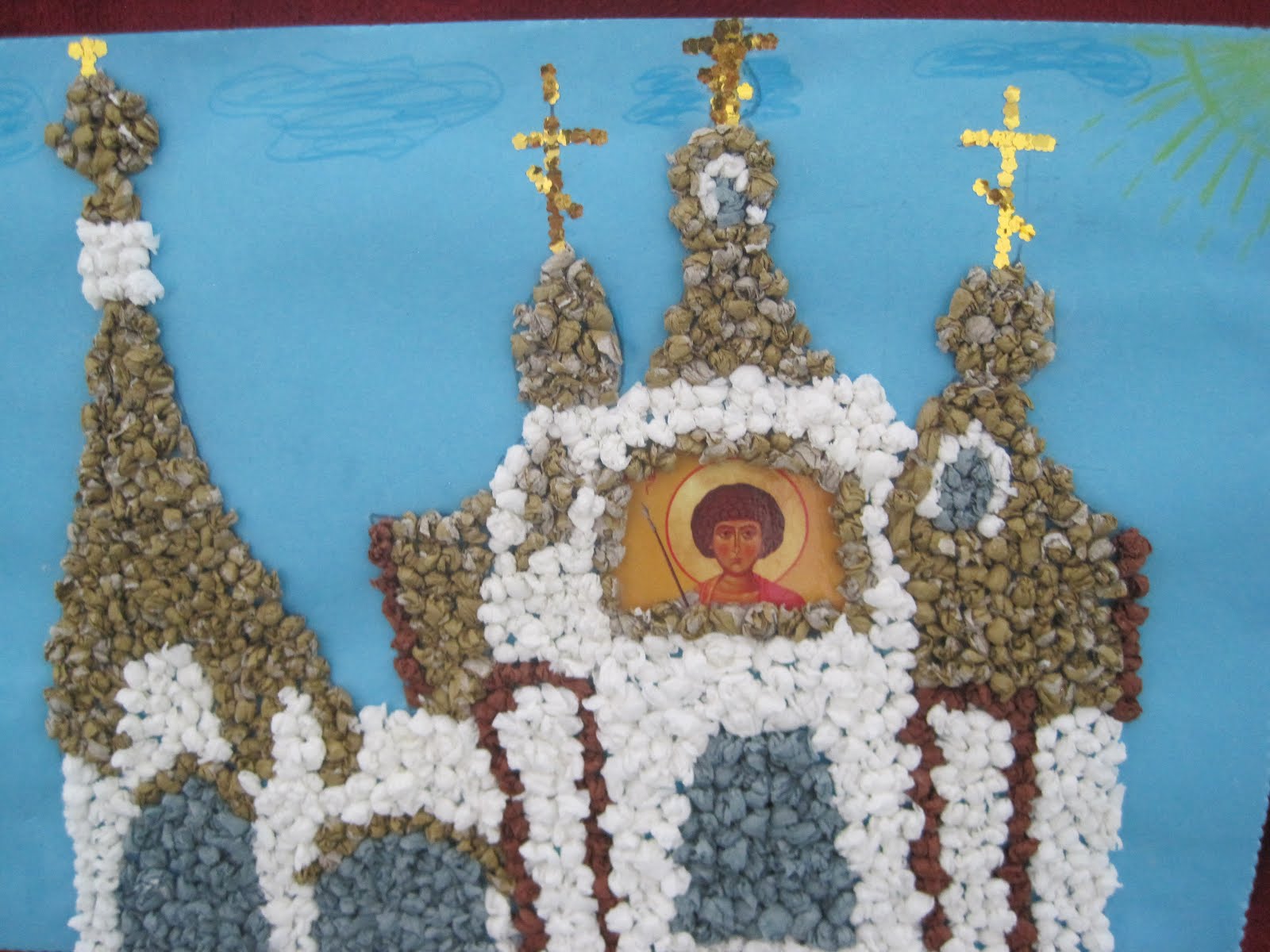


Bozena Gobcewicz, English Teacher of Szkoła Podstawowa nr 47 im. J.K. Branickiego/Poland
Monday, 2 July 2012
Mediation: The Play Three Little Pigs/Croatia
7th grade pupils have prepared the play -modified version of The three little pigs
assisted by German teacher Vesna Horvat Kovacec and social pedagogue Ana Vasiljev.
The conflict between the characters is solved in a non-violent way through mediation.
This version is in Croatian. Maybe next year we'll make an English version as well.
Sunday, 1 July 2012
The World Day of Muslim Culture/ Croatia
Primary School Zitnjak is multicultural and multireligious. Besides Catholic religious classes the school also provides classes of Islam for its pupils. The school was the first school in Zagreb which introduced classes of Islam.
Every year the Day of Religious Freedom is celebrated when religious teachers and their pupils prepare presentations and make posters.
Our pupils and teachers visit the mosque in Zagreb.


.jpg)
.jpg)
Every year the Day of Religious Freedom is celebrated when religious teachers and their pupils prepare presentations and make posters.
Our pupils and teachers visit the mosque in Zagreb.


.jpg)
.jpg)
3rd Partnership Meeting in Zagreb: The Programme/Croatia
Comenius multilateral
school partnership
Join hands and hug Europe
3rd
meeting: Zagreb, May 21-25
Title: Let's join hands and be creative
|
||
Monday 21/05/2012 Opening session
|
||
19:00 – 20:00
|
Concert
|
|
20:00 – 21:30
|
Welcome dinner
|
|
Tuesday 22/05/2012
|
||
Programme for teachers
Creative
methodology in ELT
|
Programme for pupils
Let's join
hands and be creative
|
|
08:30 – 09:15
|
Ivana Čale
Pronunciation
games and activities (workshop)
|
Ana Vasiljev and Vesna
Horvat Kovačec
Ice-breakers
|
09:15 – 09:30
|
Break
|
|
09:30 – 10:15
|
Paula Vranković
Beyond the
language frame
|
Sandra Maglov
Arts and crafts
|
10:15 - 10:45
|
Coffee break
|
|
10:45 – 11:30
|
Margita Madunić,
Croatian culture
(25 mins)
Quiz about
Croatia (20 mins)
Moderator: Drago Čavlović
Hosts: pupils Kristina
Jagić, Patrik Lukanović
|
|
11:30 – 12:30
|
Lunch
|
|
Afternoon
|
Sightseeing: Zagreb, Samobor
Dinner in school 20.00-21.00
|
|
Wednesday 23/05/2012
|
||
08:20 – 09:05
|
Michella Chiappini
Translation as
a bridge among cultures
|
Margareta Milačić, Frane
Rogić
Workshop (Art)
|
10.00 – 11.00 Meeting the Mayor of Zagreb Mr. Bandic
|
||
11:45 – 12:45
|
Lunch
|
|
Afternoon
|
Sightseeing: Trakošćan, Varaždin
Dinner: 19:30-20:30
|
|
Thursday
24/05/2012 Excursion
to the island of Krk Departure at
05:30
|
||
3rd partnership meeting in Zagreb: Report /Croatia
3rd Comenius partnership meeting Join hands and be creative in Zagreb
The third Comenius meeting Let's join hands and be creative took
place in Zagreb, May 21-25, 2012. There
were 48 participants including pupils, teachers, headteachers from the partner
schools:the Czech Republic, Italy, Lithuania, Poland and Turkey.
The host of the meeting was Primary School Zitnjak, the
coordinator of the project Join hands and
hug Europe (multilateral Comenius partnership).
On May 21, two teachers welcomed the guests
from Poland, Turkey and Lithuania at the airport. The teams from Czech Republic
and Italy arrived at the hotel by van and bus.
The guests from Turkey visited the mosque in Zagreb
accompanied by the headmaster of the host school, German teacher and Alen
Kotoric, the religious teacher of Islam.
All the guests were staying at Hotel Meridijan 16 except
12 pupils who were staying with the families of the Croatian pupils.
The official programme started at 7 p.m. Introductory
welcoming speeches were given by the headteacher of Primary School Zitnjak Mr Barun
and Ms Milkovic, representative of City
Office for Education, Culture and Sports, who greeted the guests wishing them
an enjoyable stay in Croatia. The pupils
from Primary School Zitnjak showed their singing and dancing skills performing
in the school choir, folklore and rock'n'roll club, etc.
On Tuesday and Wednesday the workshops were
held in Primary school Zitnjak from 8.30 to 11.30 a .m. The workshops
for pupils commenced with the warm-up activities ice breakers the aim of which was allowing pupils
to familiarize themselves with their peers-to introduce themselves and learn
about their peers. The introductory
activities ice breakers were run by social pedagogue Ana Vasiljev and German
teacher Vesna Horvat Kovačec. German teacher Sandra Maglov was running a craft
workshop. Art teacher Margareta Milačić and painter Frane Rogić, from the
neigbouring atelier Zitnjak , were running an art workshop for the pupils. On
Wednesday art teacher from Ankara Ms Özlem Şenyüz and her pupils demonstrated
Ebru, the Turkish technique of painting, which impressed all the participants.
A few participants tried out Ebru technique and made
their own paintings.
The topic of
the workshops for teachers was Creative methods
in ELT. Since all the coordinators are English teachers the aim was
exchanging teaching tips and resources, sharing good practice. The workshops
were run by English teachers Michela
Chiappini (Italy), Paula Vrankovic and
Ivana Cale from Zagreb.
After the concise outline of Croatian
history and culture presented by history
teacher Margita Madunić Kaniski, the general knowledge of Croatian culture was
checked in the quiz hosted by the 7th graders Kristina Jagic and Patrik
Lukanovic.
During the
breaks the participants observed some lessons. While visiting the classrooms
during the lessons, the guests gave the pupils typical sweets from their
country and some souvenirs for the classrooms.
After the
workshops two half day excursions were
organized: Zagreb andSamobor (22/05), Trakoscan Castle and Varaždin (23/05) .On
May 24 a
full day excursion to the island of Krk was organized during which the guests,
accompanied by the tourist guide and a few Croatian teachers ,visited the town
of Krk, Punat, small island Košljun,
Vrbnik, Jurandvor and Baska. Thanks to the sunny weather some guests-teachers and
pupils were swimming and the pupils were playing volleyball on the beach.
On May 23 the
Deputy of the Mayor of Zagreb Ms Pavičić Vukičević held a reception for the
participants of the Comenius partnership and wished them a pleasant stay in
Croatia.
Friday Morning (23/05): Time to Say Goodbye/Croatia
Saying goodbye in front of the hotel.
 |
| Turkish pupils with their English teacher Aslı |
 |
| Croatian pupils waving goodbye to their friends from the school bus |

 |
| Headmasters Kemal and Tomislav |


 |
| Headmasters Tomislav, Halina and teacher Anita |
Friday 25/05 Going to the Zoo/Croatia
The guests from Lithuania and Poland with a few Croatian pupils and teachers went to the Zoo.

 |
| Lithuanian&Croatian frienship |

 |
| The host pupils, 7th graders |
 |
| The Polish pupils: Zuzanna and Roksana (5th grade) |

 |
| The badges were designed by maths teacher Ljiljana Baresa |
The Lithuanian team-pupils and teachers singing in Maksimir
We were impressed by their singing on the bus and their immense knowledge of the lyrics
Excursion 24/05: The Island of Krk (6 a.m.-12 p.m.)/ Croatia
The town of Krk
Sightseeing with the local tourist guide


 |
| Michela, Italian tourist guide, and Milena, local tourist guide |
 |
 Punat |


 |
| Irada |


Volleyball on the beach
Subscribe to:
Posts (Atom)
